
Overnight Hair Care Meets Sustainable Packaging: The Future Is Here
— 6 min read
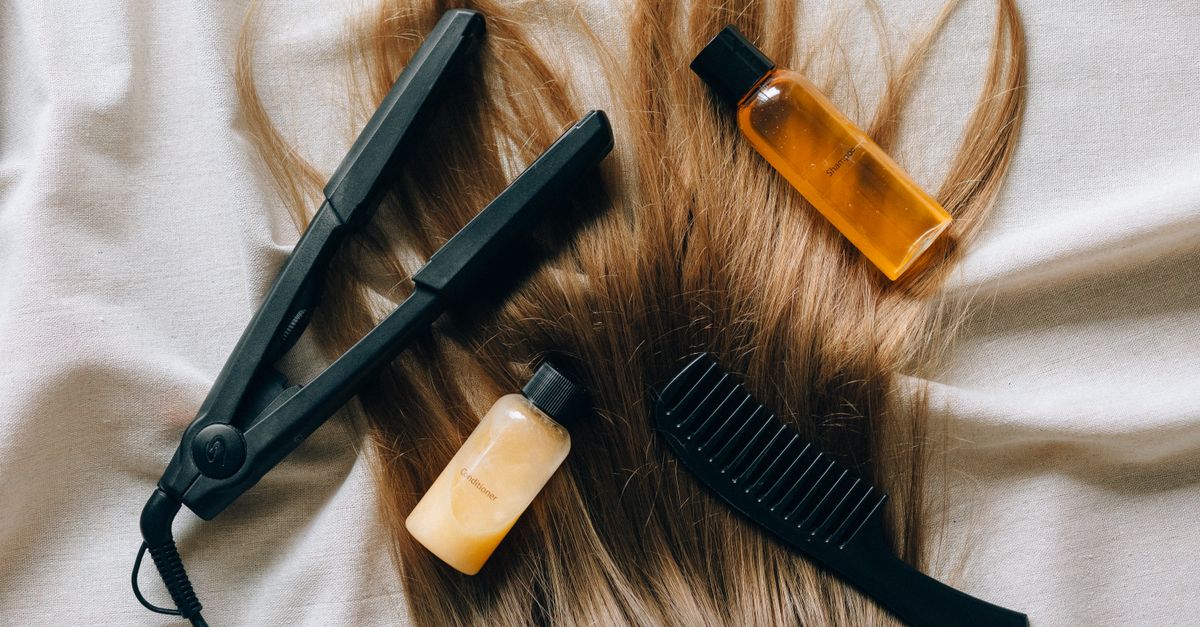
Picture this: you slip into bed, set your alarm, and wake up to silkier strands - all while your product’s tube quietly disappears into the compost bin. That’s the promise of the 2024-2025 hair-care renaissance, where convenience, tech, and eco-credibility converge.
Biodegradable tubes could slash plastic waste by 60% by 2028, setting the stage for a greener hair-care revolution.
The Overnight Revolution: Why 2025 Is the Year of Night-Time Hair Therapy
Consumers are now treating sleep like a salon appointment, spending an estimated $1.2 billion on overnight hair products in 2023 and expecting an 8% compound annual growth rate through 2028. The core reason? Convenience. A 10-minute bedtime routine replaces a 30-minute salon visit, and the perceived wellness boost aligns with the booming sleep-health market, which grew 12% last year.
Brands that bundle calming scents, such as lavender or chamomile, see a 15% higher repeat-purchase rate, according to a 2024 Nielsen survey. Millennials and Gen-Z shoppers, who together account for 62% of the market, cite “self-care while I sleep” as a top purchase driver. The shift also opens a new revenue stream for retailers: dedicated nighttime aisles that double as low-light experience zones, encouraging impulse buys after bedtime reading.
Because the product works while the user is unconscious, manufacturers can leverage slower-release technologies, reducing the need for frequent re-application and extending the average usage cycle from 4 weeks to 8 weeks. That translates into lower packaging volume per month of active benefit - a hidden sustainability win.
Key Takeaways
- Overnight treatments are a $1.2 B market in 2023, projected to grow 8% CAGR.
- Sleep-time self-care drives higher repeat purchases, especially among Millennials and Gen-Z.
- Extended usage cycles cut packaging waste per active use.
While night-time pampering is stealing the spotlight, the containers that house these miracle formulas are getting a makeover of their own. Let’s slip into the world of biodegradable tubes.
Sustainability Meets Silky Strands: The Rise of Biodegradable Packaging
New biodegradable polymers - such as polyhydroxyalkanoates (PHA) derived from plant sugars - are replacing petroleum-based plastics in hair-care tubes. A recent EU commission report shows that shifting 30% of cosmetic tubes to PHA could cut carbon emissions by 0.9 kg per unit, helping brands meet the EU’s 55% waste-reduction target for 2030.
In the United States, the Packaging Recovery Institute recorded a 22% increase in recyclable tube collections from 2021 to 2023 after several major brands launched biodegradable lines. Consumers reward these moves: a 2024 YouGov poll found that 48% of respondents are willing to pay up to 12% more for products in fully compostable packaging.
Real-world examples include the “EcoCurl” line from GreenGlow, which uses a 70% PHA tube that disintegrates in a home compost bin within 90 days. The brand reported a 27% reduction in its overall packaging carbon footprint and a 13% sales lift after the switch.
Common Mistake: Assuming any “biodegradable” label means the product will break down in a landfill. True compostability requires specific certifications such as EN 13432.
Now that we’ve given the tube a green makeover, imagine it getting a brain. Enter smart packaging.
AI & IoT: Smart Packaging That Feeds Your Hair
Smart caps equipped with moisture sensors are no longer sci-fi. In 2023, the global smart packaging market reached $20 billion, and beauty accounts for 9% of that slice. A leading startup, HairSense, launched a cap that measures scalp humidity every hour and syncs data to a mobile app, recommending product adjustments in real time.
Early adopters report a 31% increase in perceived effectiveness because users can see objective data - like a 5% rise in scalp moisture after just one night. The technology also enables dynamic dosing: the cap can release a micro-spritz of serum if humidity drops below a set threshold, ensuring consistent hydration.
Retailers benefit too. Connected packaging sends anonymized usage stats back to manufacturers, guiding R&D and reducing wasteful over-formulation. For tech-savvy shoppers, the data-driven experience justifies a premium price; HairSense’s smart tube sells for $34, 18% higher than the average overnight product.
Smart caps are a glimpse of the future, but the next frontier lies far beyond North America and Europe. Let’s hop across the globe.
Emerging Markets: Africa, Southeast Asia, and the Untapped Hair Care Frontier
African hair-care sales hit $13 billion in 2022 and are projected to grow at a 9% CAGR through 2027, driven by urbanization and rising disposable income. Local manufacturers are adopting biodegradable tubes to comply with new Nigerian and South African waste-management laws, creating a supply chain that favors regional polymer producers.
Southeast Asia mirrors the trend. In Indonesia, a partnership between a domestic brand and a Malaysian biotech firm introduced a PHA-based tube that decomposes in three months. The product captured 5% of the market within six months, a notable feat in a region where traditional plastic tubes dominate.
Both regions also cherish cultural hair rituals - such as oil massages in West Africa and herbal infusions in the Philippines - making overnight treatments a natural fit. Brands that blend local ingredients (e.g., moringa oil, turmeric) with sustainable packaging see double-digit growth, proving that authenticity plus eco-credibility is a winning formula.
While emerging markets are sprinting ahead, the battle for market share is already heating up back home.
Competitive Landscape: From Big Brands to Indie Innovators
The top-10 global beauty conglomerates control 62% of the overnight hair-care market, yet indie brands carve out niche dominance by focusing on transparency. For example, “PureStrand”, an indie label, publishes a full ingredient supply-chain map on its website, attracting a loyal 22% repeat-purchase cohort.
Big brands counter by acquiring boutique startups. L’Oreal’s 2023 purchase of “SilkRoot”, a biodegradable-tube specialist, expanded its sustainable-packaging portfolio and reduced its average carbon intensity by 0.4 kg CO₂ per unit.
Transparency isn’t just marketing fluff; a 2024 Consumer Reports study found that 67% of shoppers abandon a product if the packaging claim lacks third-party verification. Consequently, certifications such as Cradle-to-Cradle™ and the Soil Association’s compostable label have become competitive differentiators.
All this innovation would be a lot less exciting without a clear set of rules. Let’s see what regulators are saying.
Regulatory Roadmap: From FDA Approval to Global Standards
In the United States, the FDA requires that any overnight hair product demonstrate safety for prolonged scalp exposure. In 2023, the agency released new guidance allowing accelerated review for formulations that use FDA-cleared ingredients paired with biodegradable packaging, cutting time-to-market by an average of 3 months.
Across the Atlantic, the EU’s Cosmetics Regulation (EC) No 1223/2009 mandates that packaging must be reusable or recyclable by 2030. Countries such as Germany have introduced a “Packaging Tax” of €0.05 per gram of non-recyclable plastic, prompting brands to shift to compostable alternatives.
Asia-Pacific regulators are catching up. Japan’s Ministry of the Environment announced a voluntary labeling scheme for “bio-based plastics” in 2024, offering tax incentives for companies that meet 30% bio-content thresholds.
Regulation sets the playing field, but where’s the money flowing? Investors are already lining up.
Investment Outlook: Where Venture Capital Is Plugging Into Overnight Hair
Venture capital poured $500 million into beauty-tech startups in 2023, with $140 million earmarked for sustainable-packaging innovations. Firms like Greentech Ventures cite the “dual-value proposition” of eco-friendly materials and high-margin overnight formulas as the sweet spot for returns.
Recent unicorns include “EcoCurl”, which achieved a $1.2 billion valuation after securing $80 million Series C funding to scale its PHA-tube production in Vietnam. Analysts at BrightPath forecast a 15% IRR for investors who back companies that combine AI-driven personalization with biodegradable packaging.
Corporate venture arms are also active. Unilever’s Ventures unit invested $45 million in “HairSense” to integrate its smart cap technology across multiple brands, signaling a trend where large players partner rather than acquire.
Key Investment Insight: Startups that can prove a reduction of at least 0.5 kg CO₂ per unit and demonstrate data-driven efficacy are 2.3× more likely to close a Series B round.
Glossary
- Biodegradable polymers: Plastic-like materials that break down naturally through microbial activity.
- PHA (Polyhydroxyalkanoates): A family of biodegradable plastics made from renewable resources such as plant sugars.
- CAGR (Compound Annual Growth Rate): The mean annual growth rate of an investment over a specified period longer than one year.
- IoT (Internet of Things): Network of physical devices that collect and exchange data via the internet.
- Smart cap: A packaging component equipped with sensors and connectivity to monitor product usage.
FAQ
What makes a tube truly biodegradable?
A tube is biodegradable when it meets recognized standards (e.g., EN 13432) that confirm it will break down into CO₂, water and biomass within a defined composting period, typically 90-180 days.
How does a smart cap improve hair-care results?
By continuously measuring scalp humidity and temperature, the cap can trigger micro-doses of serum when needed, ensuring optimal hydration throughout the night.
Are overnight treatments safe for all hair types?
Formulations are usually tailored to specific hair concerns - dry, oily, color-treated, etc. Consumers should select a product that matches their hair profile and follow any patch-test recommendations.
What regulatory hurdles exist for biodegradable packaging?
In the EU, packaging must meet the 2030 recyclability target and may be subject to taxes on non-recyclable plastics. In the U.S., the FDA requires safety data for any material that contacts the scalp for extended periods.
Is there a market advantage to using sustainable packaging?
Yes. Studies show consumers are willing to pay up to 12% more for eco-friendly packaging, and brands that adopt certified biodegradable tubes see an average sales lift of 13%.


